Container Cleaning
What to confirm before buying a crate washing machine
A practical checklist for food factories and central kitchens preparing crate washing machine inquiries, layout details, and cleaning workflow requirements.
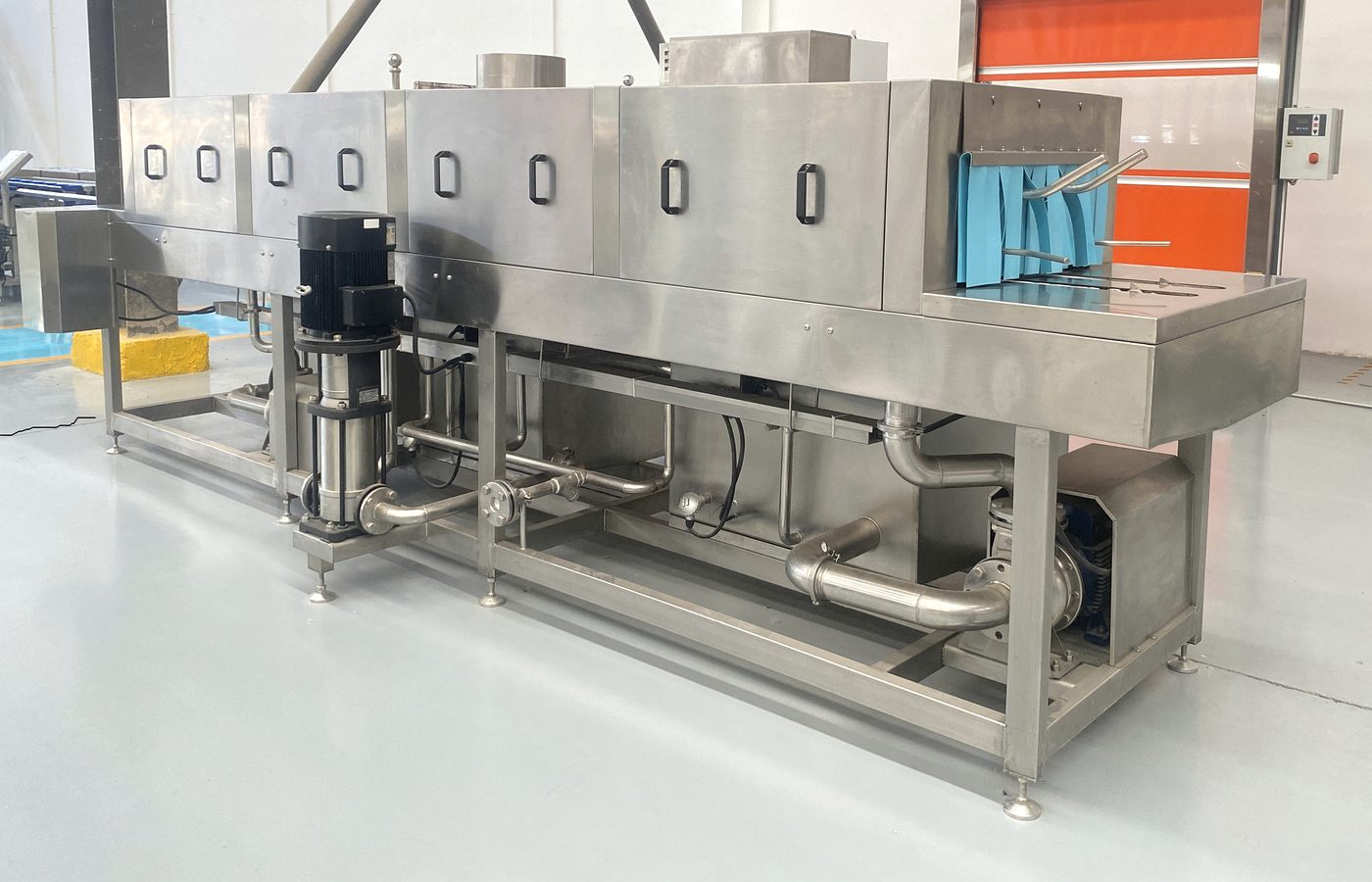
Start with crate size, residue, and daily volume
A crate washing machine should be selected around real container use, not only the machine photo. In a food processing plant, turnover crates may carry meat residue, seafood water, vegetable soil, bakery dust, or packaging marks. Before quotation, buyers should confirm crate dimensions, opening direction, stack method, daily washing quantity, and soil level. For central kitchens and food logistics areas, these details affect conveyor width, spray coverage, water circulation, heating options, and whether manual pre-rinsing is still needed before the machine.
Check water, drainage, space, and maintenance access
Container cleaning equipment works in wet areas, so site conditions matter. Buyers should check water pressure, drainage position, floor slope, available length, operator access, and cleaning space around the machine. Stainless steel equipment is commonly used for food factory hygiene equipment because it supports regular rinsing and inspection. A larger crate washing machine is not always the correct choice if the factory has limited floor space or difficult drainage. The practical model is the one that fits the washing volume without blocking worker flow or maintenance work.
Plan crate cleaning with the wider hygiene workflow
Crate washing should connect with the full production workflow: dirty crates arrive, containers are washed and rinsed, water is drained, and clean crates return to storage or production. For commercial kitchen hygiene equipment projects, contractors and distributors should confirm where dirty and clean routes separate. OEM / ODM equipment partners may also need custom stainless steel equipment when crate size, voltage, export packing, or factory layout is different from standard models. A clear checklist helps suppliers recommend a crate washing solution that matches daily factory management.
Comments
Discuss this topic
Visitors can leave a short comment or question about this article. Comments are shown on this device after submission.
No comments yet. Be the first to discuss this topic.