Boot Management
Planning boot drying racks for wet production areas
How boot drying racks help food processing plants manage footwear storage, moisture control, and daily hygiene entry routines.
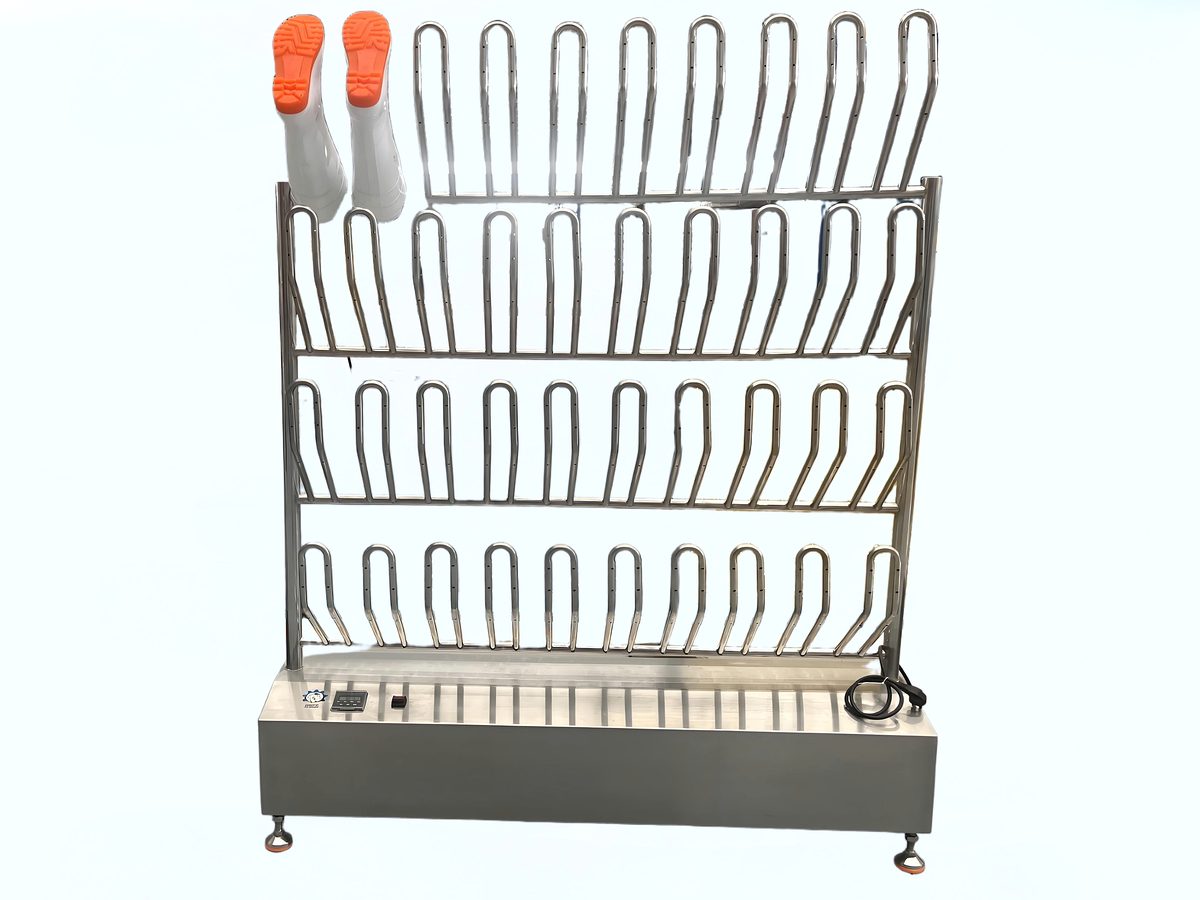
Wet boots need a clear place after production
In wet production areas, work boots often carry water, soil, and process residue after each shift. If footwear is left on the floor or mixed with personal shoes, the changing room becomes harder to manage. A boot drying rack gives workers a fixed place to return boots after cleaning and supports a more organized hygiene entry solution for the next shift. In a food processing plant, central kitchen, seafood facility, meat plant, or farm biosecurity area, boot storage should be planned as part of the daily route, not as an afterthought.
Match rack capacity with worker flow and room layout
Before choosing a boot drying rack, buyers should confirm worker quantity, boot size, shift schedule, changing room width, power needs, airflow direction, and cleaning access. Stainless steel equipment is commonly used because the rack may stand in wet rooms and needs regular rinsing. The layout should leave space for workers to move from shoe lockers to a hand washing station, automatic boot washer, or boot sole washer without crowding. A rack with too little capacity can create disorder, while a rack placed in the wrong position can block the hygiene entry area.
Connect drying, washing, and storage into one routine
Boot drying racks work best when they are connected with boot washing equipment, hand washing, hand disinfection, and locker storage. For food factory hygiene equipment projects, the goal is to make footwear handling repeatable: take clean boots, enter production, wash boot soles after use, dry the boots, and store them in the right place. Distributors, commercial kitchen hygiene equipment contractors, and OEM / ODM equipment partners can discuss custom stainless steel equipment when the factory has special room limits, worker numbers, or export requirements. Good boot management helps make the entry process easier to inspect and maintain.
Comments
Discuss this topic
Visitors can leave a short comment or question about this article. Comments are shown on this device after submission.
No comments yet. Be the first to discuss this topic.