Hand Hygiene
How to size a hand washing station for food factory shift changes
Practical planning notes for matching hand washing positions with peak worker flow, hygiene steps, utilities, and entry room space.
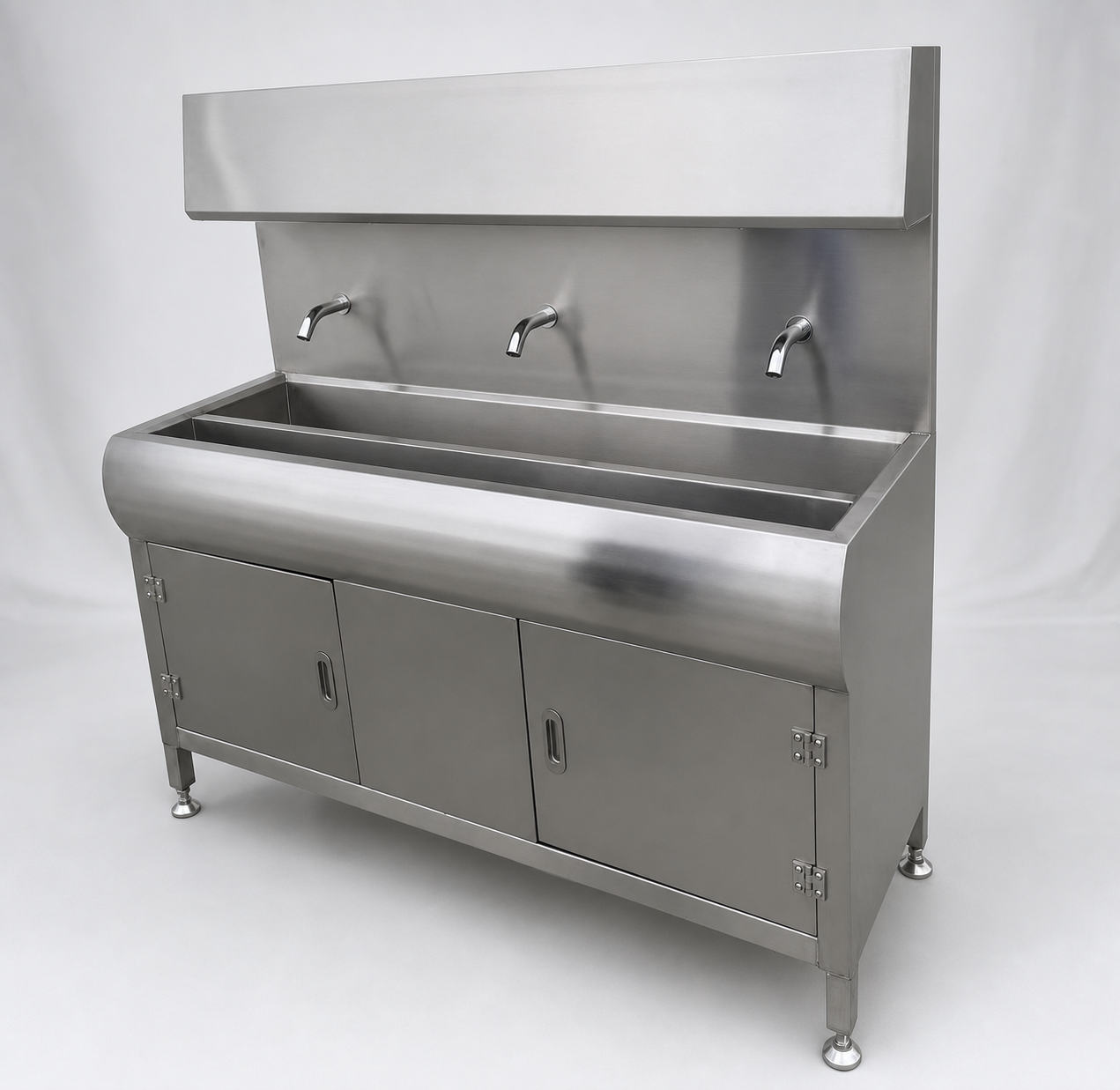
Calculate demand from peak entry flow
A hand washing station should be sized around the busiest entry period, not the total number of employees. A food processing plant may employ one hundred people, but only part of the team may enter through one hygiene entry station at the same time. Project teams should record the number of workers in each shift, how many minutes are available before production, whether departments enter separately, and whether visitors use the same route. These details help estimate the washing positions required without creating long queues or filling the room with unused stainless steel equipment.
Review washing steps, space, water, and drainage
Capacity also depends on the hygiene procedure. A process that includes soap application, timed washing, rinsing, drying, and hand disinfection takes longer than a simple rinse. Buyers should confirm water supply, drainage capacity, splash control, soap refilling, waste handling, and access for daily cleaning. The hand washing station needs enough standing room, but it should not narrow the route to an industrial boot washer or boot sole washer. For central kitchen and food factory hygiene equipment projects, sink depth, tap spacing, activation method, and worker reach should support repeatable use during busy shift changes.
Connect hand washing with the full hygiene entry route
The correct number of wash positions is only useful when the wider hygiene entry solution is clear. Workers may change shoes, wash hands, clean boot soles, complete hand disinfection, and pass through controlled access before production. The hand washing area should not cause clean and dirty routes to cross or block a boot drying rack and shoe locker zone. Contractors, distributors, and OEM / ODM equipment partners should provide room dimensions, peak worker count, entry time, water points, drainage, and the required hygiene sequence before quotation. This information helps custom stainless steel equipment fit daily factory management instead of relying on a fixed worker-to-tap ratio.
Comments
Discuss this topic
Visitors can leave a short comment or question about this article. Comments are shown on this device after submission.
No comments yet. Be the first to discuss this topic.